
How Reflexology Works: What to Expect From Your First Session in Austin
If you have ever wondered whether pressing on specific points of your feet could actually do something for the rest of your body, reflexology is the answer to that question. It is one of the oldest forms of bodywork still in regular practice today, and it has a devoted following among Austin wellness seekers who come out of sessions feeling calmer, more energized, and surprisingly clear headed. At Oak Haven Massage, first-time reflexology clients are often the most curious ones, so here is what you can expect from your first appointment and how the practice actually works.
Reflexology is a targeted therapy that applies precise, sustained pressure to specific points on the feet, hands, or ears, all of which practitioners map to corresponding organs and systems throughout the body. The goal is not muscle relaxation in the traditional massage sense but rather systemic balance. That distinction matters, and understanding it before your first session can help you get more out of the experience.
What Is Reflexology, Exactly?
Reflexology is a complementary therapy that traces its roots back thousands of years, with versions of the practice documented in ancient Egypt, traditional Chinese medicine, and various Indian healing traditions. The modern Western version was introduced to the United States in 1913 by Dr. William Fitzgerald, an ear, nose, and throat specialist who described what he called “zone therapy.” In the 1930s, a nurse and physiotherapist named Eunice Ingham refined the practice, mapping the feet into specific reflex zones that correspond to different body parts and systems.
The underlying theory is that your feet contain a complete map of your body. The toes correspond to the head and sinuses, the ball of the foot to the chest and lungs, the arch to digestive organs, and the heel to the lower back and pelvic area. A trained reflexologist uses this map to guide their work, applying pressure to specific zones based on what your body may need.
It is worth knowing that reflexology is considered complementary rather than medical care. Practitioners do not diagnose conditions or replace a doctor’s treatment plan. What they do is work with your body to encourage relaxation, reduce stress, and support your own healing processes, which many clients find valuable on its own terms.
How Reflexology Works
There are a few different theories about how reflexology produces its effects. The most widely cited draws on zone theory, which divides the body into 10 vertical zones that run from the top of the head down to the feet. Each zone contains corresponding points on the feet, so pressure applied to a specific spot on the foot is believed to influence the matching zone throughout the body.
A second theory focuses on the nervous system. Pressing on reflex points stimulates the nerves in your feet, sending signals to the central nervous system that may trigger a relaxation response, release endorphins, and activate the parasympathetic system. The result is lower stress, improved circulation, and a general sense of calm that many people feel almost immediately.
A third perspective draws on traditional Chinese medicine and the concept of energy pathways. From this view, tension, stress, or blocked energy can manifest as congestion in specific reflex areas on the feet, and sustained pressure helps clear those blockages so the body can return to balance. You do not have to buy into any specific framework to benefit from reflexology; most clients simply notice that it feels good and that they sleep better afterward.
Reflexology vs. a Regular Foot Massage
This is one of the most common questions first-time clients ask, and the answer is more nuanced than it might seem. A regular foot massage uses broad strokes, kneading, and flowing pressure to relax the muscles and tissues of the foot itself. It feels wonderful, improves local circulation, and is a great antidote to a long day on your feet. The focus is the foot.
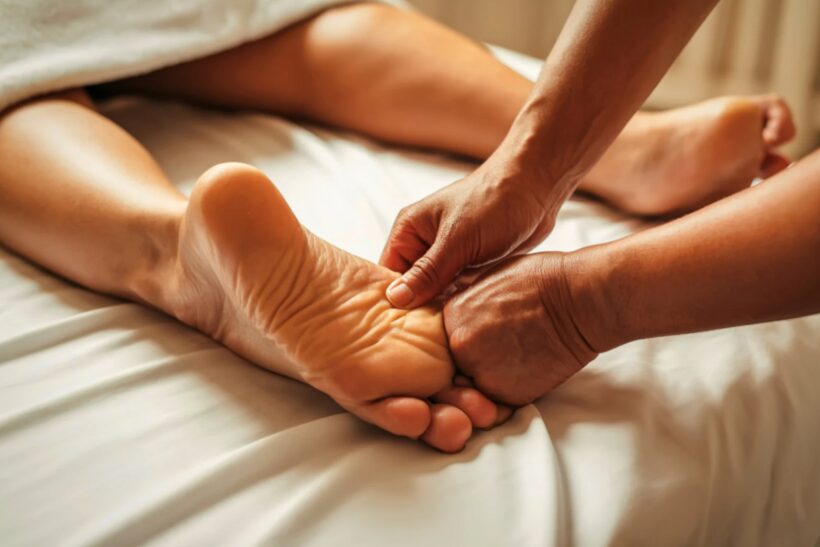
Reflexology uses the foot as a tool to affect the rest of the body. A reflexologist applies fine, sustained pressure to specific points using their thumbs, fingers, and sometimes small instruments, often holding each point until the tissue softens. The movements are more precise than a massage, the pressure is more targeted, and the goal is systemic rather than localized. No oils or lotions are typically used, since the therapist needs direct contact with the skin to feel subtle changes in the tissue.
The two practices can complement each other beautifully. Many clients book a traditional massage, such as a Swedish or deep tissue massage, for full body relaxation and add reflexology for a more focused reset. The combination often produces better results than either one alone.
What to Expect During Your First Session
Walking into your first reflexology appointment at an Austin studio is simple. You stay fully clothed throughout the session; you only need to remove your shoes and socks. Your therapist will start with a brief consultation, asking about your health history, any areas of concern, your stress levels, sleep quality, and what you are hoping to get out of the session.
Next, you will sit in a reclining chair or lie on a massage table, with your feet elevated to a comfortable working height. Many reflexologists begin with a warm foot soak, a cleansing rinse, or simply a thorough assessment of the feet for any rashes, bunions, or tender areas that might need attention. This check in is as much for safety as it is for building a sense of trust with the therapist.
The session itself usually runs 30 to 60 minutes, with roughly half the time spent on each foot. Your therapist will work methodically across the entire foot rather than only focusing on the areas linked to your specific concerns. They may return to sensitive spots a second or third time. Pressure ranges from light to firm, and most clients find it deeply relaxing; it is common to fall asleep during the session or feel a wave of emotional release as tension unwinds.
Potential Benefits of Reflexology

Research on reflexology is mixed, and many mainstream medical organizations note that the evidence for specific medical benefits is limited. That said, studies have consistently supported certain effects, particularly around stress and relaxation. Clients commonly report reduced stress and anxiety, better sleep quality, lower blood pressure during and after sessions, improved circulation, and relief from tension related headaches. Many also describe general feelings of calm or renewed energy, reduced foot pain and tired feet symptoms, and a sense that reflexology supports other treatments they are already receiving for chronic conditions.
Several studies have documented reflexology’s value for pain management, particularly after surgery, during cancer care, and for chronic conditions such as fibromyalgia. A 2022 review found evidence that foot reflexology may reduce several types of pain, while another study reported significantly improved sleep quality among kidney transplant patients who received reflexology. These results do not prove reflexology heals specific conditions, but they do suggest it has real value as a relaxation and wellness tool.
Honest framing matters here. Reflexology is not a substitute for medical care. It is a complementary practice that many people find useful for managing stress, improving sleep, and feeling more balanced overall, and that context is part of why Austin clients keep coming back.
Who Should Try Reflexology
Reflexology is a strong fit for people dealing with chronic stress, poor sleep, mild to moderate anxiety, tired feet, tension headaches, or general feelings of being overstimulated and disconnected. It is also a thoughtful choice for anyone who wants bodywork but finds a full body massage too intense, too exposed, or too intimate for their comfort.
A few situations call for extra care. Reflexology may not be appropriate if you have a recent foot injury or surgery, gout or acute inflammation in the feet, blood clots or a clotting disorder, or certain types of arthritis affecting the feet or ankles. It should also be avoided if you have open wounds, active infections, or contagious skin conditions on the feet. Pregnant clients should speak with their doctor first, since some reflexology pressure points are contraindicated during pregnancy.
If you fall into any of these groups, speak with your doctor before booking, and share relevant details with your therapist so they can adjust accordingly. For most healthy adults, reflexology is low risk and easy to add to a broader wellness routine. Pairing a session with a visit to the infrared sauna can extend the relaxation effects and support circulation even further.
How to Prepare for Your Session
Preparation is simple. Wear comfortable clothing you can easily sit or lie in; loose pants or shorts make it easier for the therapist to access your lower legs if needed. Avoid heavy meals in the two hours before your appointment. Drink water before and after the session to support circulation and hydration.
Arrive a few minutes early so you have time to fill out any intake forms, discuss your goals with the therapist, and settle into the space before the session begins. Bring a list of any medications, recent surgeries, or chronic conditions so your therapist can tailor the treatment appropriately. If you are sensitive to smells, let the studio know so they can limit diffusers or essential oils in the treatment room.
After the session, plan for a gentle rest of the day if possible. Some clients feel energized, others feel a deep calm, and a smaller group experiences mild symptoms such as tiredness, thirst, or emotional release as tension unwinds. All of these reactions are normal and usually pass within a day.
How Often to Schedule Reflexology
The ideal frequency depends on your goals. For general wellness and stress management, many clients schedule reflexology every two to four weeks, much like a regular massage. If you are working on a specific concern such as chronic headaches or sleep difficulties, weekly sessions for six to eight weeks can produce more noticeable cumulative effects, followed by monthly maintenance once symptoms improve.
Consistency tends to matter more than intensity. Reflexology’s benefits are often subtle at first and build over time, so a series of regular sessions usually produces better results than occasional one off visits. If you are trying to figure out the right cadence, our guide on how often you should get a massage applies here too. A membership can make regular sessions easier on your budget if ongoing care fits your wellness goals.
Frequently Asked Questions
Do I have to take my clothes off for reflexology?
No. You stay fully clothed throughout the session and only need to remove your shoes and socks. You may want to pull your pants up to your knees so the therapist can access your lower legs if needed. This is one reason reflexology appeals to clients who find traditional full body massage too exposed or intimate.
Does reflexology hurt?
Reflexology should not be painful. Certain reflex points may feel more sensitive than others, especially if they correspond to areas where your body is holding tension. A skilled therapist adjusts pressure based on your feedback so the session stays comfortable throughout. Always tell your therapist if anything feels too intense.
How is reflexology different from acupressure?
Both practices use sustained pressure on specific points, but they work with different maps. Acupressure uses the same meridian system as acupuncture, with points located throughout the entire body. Reflexology focuses almost exclusively on the feet, hands, and ears, with a specific map that assigns body systems to zones on those areas.
Will I feel anything during the session?
Most clients report a deep sense of relaxation, and many fall asleep. Some experience physical sensations such as warmth, tingling, or slight twitches as their nervous system adjusts. A smaller number feel emotional release, including laughter or quiet tears, as long held tension begins to soften. All of these responses are normal.
Can reflexology help with specific health conditions?
Reflexology is a complementary therapy, not a medical treatment. Studies have suggested benefits for stress, anxiety, sleep, some types of pain, and quality of life during serious illness, but the research is mixed and not strong enough to support treatment claims. Think of reflexology as a supportive tool that works alongside your medical care rather than in place of it.
How long does it take to feel a difference?
Many clients notice benefits after their first session, especially around sleep, stress, and general calm. Deeper or more specific goals such as chronic pain management usually require a series of regular sessions. Be patient with the process; reflexology works cumulatively, and consistency often produces more meaningful results than intensity.
About Oak Haven Massage
Oak Haven Massage is a therapist owned wellness studio serving the Greater Austin and San Antonio regions, with therapists trained in a wide range of modalities including reflexology, deep tissue, prenatal, craniosacral, aromatherapy, and more. Our team trains well beyond a standard massage license, so every session is personalized to your body, your goals, and your preferences. You can also visit our San Antonio Bulverde and San Antonio Huebner studios if you find yourself in the area.
Ready to Book Your First Reflexology Session?
If you are curious to see what targeted pressure work on your feet can do for your stress, sleep, and overall sense of balance, our Austin therapists are ready to help. Book a session at our Austin MoPac/2222, Austin Pecan Park, or Austin South First studio and experience the quiet, grounded calm that keeps clients coming back. Book your appointment online at oakhavenbooking.com.