
What Is Craniosacral Therapy and Can It Help With Chronic Headaches?
If you have spent any amount of time searching for relief from chronic headaches, you have probably come across craniosacral therapy. It shows up on wellness center menus, in physical therapy clinics, and in the recommendations of friends who seem to have tried everything. The claims around it can sound almost too good to be true: a gentle, hands on treatment that uses almost no pressure yet may help with conditions ranging from migraines to chronic pain to anxiety. At Oak Haven Massage, we see a steady stream of clients who come in specifically for help with recurring headaches, and craniosacral therapy is often part of the conversation.
Craniosacral therapy is an unusual form of bodywork. It does not look or feel like a traditional massage, it has a body of research behind it that is both promising and honestly limited, and the question of whether it can help your chronic headaches depends on a few things worth understanding before you book. Here is what craniosacral therapy actually is, how it works in theory, what the research currently shows, and how it might fit into a broader approach to headache relief.
What Is Craniosacral Therapy?
Craniosacral therapy, often abbreviated as CST, is a gentle hands on technique that uses very light touch, traditionally described as the weight of a nickel or about five grams of pressure, to evaluate and encourage the release of tension in what practitioners call the craniosacral system. This system consists of the membranes and cerebrospinal fluid that surround and protect the brain and spinal cord, extending from the skull down to the sacrum at the base of the spine.
The technique was developed in the 1930s by Dr. William Sutherland, an osteopath who proposed that the bones of the skull have subtle, rhythmic motion rather than being fused in adulthood. Decades later, Dr. John Upledger expanded and formalized the practice at Michigan State University in the 1970s, creating what is now the most widely taught version of CST. Today, the technique is practiced by massage therapists, chiropractors, physical therapists, and doctors of osteopathic medicine who have received specific CST training.
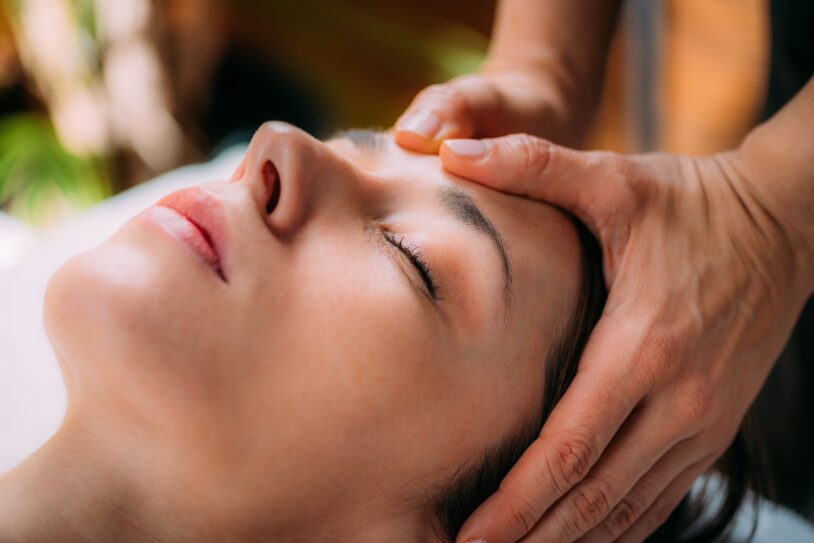
What sets CST apart from most other bodywork is how little it appears to do. A session looks almost like nothing is happening. The therapist places their hands softly on your head, spine, sacrum, or elsewhere on the body, and mostly just holds them there. There is no rubbing, no kneading, no deep pressure, and no cracking or adjusting of joints. If you close your eyes, you might wonder whether anything is going on at all. Yet many clients describe leaving the session feeling profoundly relaxed, with measurable differences in how their body feels for hours or days afterward.
The Theory Behind How CST Works
The theoretical framework behind CST centers on the idea of a craniosacral rhythm, a subtle pulse that practitioners believe moves through the membranes and cerebrospinal fluid around the brain and spinal cord. A trained CST therapist claims to be able to feel this rhythm through light contact with the body, detect areas where the rhythm is restricted or uneven, and encourage the system to release tension through precisely applied gentle pressure.
It is worth being honest about the current scientific status of this theory. The classical anatomical view holds that cranial sutures fuse in adulthood and that the skull bones do not move the way CST theory suggests. Mainstream medical reviews have pointed out that researchers have not been able to consistently identify a craniosacral pulse in controlled studies, and the mechanism proposed by CST practitioners does not have strong biological support.
At the same time, other explanations for CST’s effects have been proposed. The nervous system responds powerfully to calm, sustained, gentle touch, which activates the parasympathetic response and lowers stress hormones. Light contact with the head, neck, and spine may also release connective tissue tension through mechanisms more closely related to myofascial work than to any movement of cranial bones. In other words, CST may work, but not necessarily for the reasons its original theorists proposed.
What the Research Says About CST and Headaches
The research on craniosacral therapy for headaches and chronic pain is mixed but worth understanding in its actual form. A 2019 systematic review and meta-analysis by Haller and colleagues examined 10 randomized controlled trials covering 681 patients with chronic pain conditions including migraine, tension headache, neck pain, fibromyalgia, and back pain. The review found that CST produced statistically significant improvements in pain intensity, functional disability, quality of life, and global improvement compared to sham or control treatments, with effects sustained at six months.
A 2023 randomized controlled trial of 87 migraine patients, published in the journal Medicine, found that standardized CST was both effective and safe in reducing migraine intensity, frequency, and headache related disability. Participants received two weekly sessions for four weeks, with headache frequency and HIT-6 scores improving significantly during the CST treatment periods.
On the other hand, a 2024 systematic review focused specifically on headache disorders concluded that CST produced statistically significant but clinically unimportant changes in pain intensity, and no significant changes in disability or headache impact when compared to sham treatments. The certainty of evidence was rated very low, reflecting concerns about study quality and small sample sizes.
What should you take from this mixed picture? Craniosacral therapy may help some people with chronic headaches, particularly as part of a broader treatment approach, but the evidence is not strong enough to guarantee results or to recommend CST as a standalone treatment. It is also low risk, with few reported adverse events in the literature, so trying it is unlikely to cause harm even if the benefits turn out to be modest for you personally.
What Happens During a Craniosacral Therapy Session
If you have never had CST, the session experience is unlike any other bodywork. You will stay fully clothed throughout, so comfortable clothing is ideal. After a consultation about your symptoms, health history, and goals, you will lie face up on a massage table. The room is usually quiet, dimly lit, and calm.
The therapist typically begins by placing their hands softly on your feet, the sides of your head, or under your sacrum at the base of your spine. They will hold each position for several minutes at a time, applying almost imperceptible pressure while they evaluate what they describe as restrictions in the craniosacral system. They may then move to other areas of your body, working methodically through the head, neck, upper back, and sometimes the torso or pelvis.
Most people report a deep sense of relaxation during the session. Some fall asleep. Others experience physical sensations such as warmth, tingling, or a subtle sense of unwinding as tension releases. A smaller group reports emotional responses, including unexpected waves of grief, calm, or clarity, which CST practitioners sometimes refer to as somatoemotional release. All of these responses are considered normal.
Sessions typically run 45 to 60 minutes, though some practitioners offer longer sessions of up to 90 minutes or two hours. Afterward, you may feel unusually relaxed, a little lightheaded, or even slightly sore. Take your time getting up, drink water, and give yourself a quiet rest of the day if you can.
Who Might Benefit and Who Should Consult a Doctor First

Craniosacral therapy is appealing partly because it is so gentle that it is appropriate for a wide range of people. It is commonly offered to children and elderly clients, people recovering from surgery or injury, and individuals with chronic conditions that make traditional massage uncomfortable. For those with chronic headaches, tension headaches, migraines, TMJ dysfunction, or stress related symptoms, CST is often worth considering as one part of a broader approach.
That said, a few situations call for caution. Anyone who has had a recent stroke, traumatic brain injury, or spinal cord injury should speak with their doctor before trying CST, since pressure and positioning around the head and neck may not be appropriate in the acute recovery period. People with aneurysms, severe bleeding disorders, cerebral fluid pressure concerns, or recent skull or spine trauma should also consult their healthcare provider first.
If you have chronic headaches that are new, worsening, accompanied by neurological symptoms such as vision changes or numbness, or associated with a recent injury, please see your doctor for a proper diagnosis before pursuing CST or any complementary therapy. Headaches can sometimes signal serious underlying conditions that require medical attention, and no bodywork should replace a proper medical workup.
How CST Fits Into a Broader Headache Treatment Plan
The most important thing to understand about craniosacral therapy for headaches is that it works best as one part of a larger approach. It is not a substitute for medical care, nor is it necessarily the single solution to your pain. Many clients who find relief with CST combine it with other treatments, including medical care, physical therapy, stress management, sleep improvements, and other forms of bodywork.
Tension driven headaches, in particular, often respond well to a combination of approaches. Our post on why headache sufferers are turning to deep tissue massage therapy covers how deeper muscle work on the neck, shoulders, and upper back can complement the nervous system effects of CST. Many clients alternate between the two modalities based on what their body needs that week.
Lifestyle changes often matter more than any single treatment. Adequate sleep, consistent hydration, stress management, proper posture and ergonomics, and regular physical activity all play substantial roles in headache frequency and intensity. CST can support these changes by helping regulate your nervous system and reducing the stress that often triggers or worsens chronic headaches, but the underlying habits do the heaviest lifting.
For those who use wellness tools to support recovery, pairing a CST session with time in the infrared sauna extends the relaxation and circulation benefits. The combination tends to leave clients feeling noticeably calmer for several days afterward, which can translate to fewer or less intense headache episodes during stressful periods.
How Often to Schedule CST for Headaches
The ideal frequency depends on your situation. For chronic headache patterns, most practitioners suggest starting with weekly or biweekly sessions for four to six weeks. This gives your nervous system enough repeated exposure to the work to show whether CST is going to help you, without committing to a long series that might not be necessary. After the initial block, many clients shift to monthly or biweekly maintenance sessions depending on how their headaches respond.
Some people feel a difference after a single session, while others require several before noticing changes. Be patient during the initial stretch and track your headache patterns honestly so you can tell whether CST is contributing to real improvement. If you see no change after six to eight sessions, it is reasonable to consider other approaches.
Consistency is part of what makes CST effective for chronic issues. Sporadic sessions are unlikely to produce the cumulative shifts that help most headache patients. If you are trying to figure out a cadence that fits your life and budget, our guide on how often you should get a massage offers useful context that applies to CST as well. A membership can make a regular schedule more practical and affordable, especially during the initial four to six weeks when frequency matters most.
Frequently Asked Questions
How is craniosacral therapy different from regular massage?
CST uses very light touch, typically described as the weight of a nickel, while traditional massage uses moderate to deep pressure and works with muscle tissue. You stay fully clothed during CST sessions, there are no oils or lotions involved, and the therapist focuses on the membranes and fluid around the brain and spine rather than on the muscles themselves. The session feels almost still rather than active.
Does craniosacral therapy hurt?
No. CST is one of the gentlest forms of bodywork available. The pressure used is so light that most clients describe it as barely noticeable physically. Any discomfort you experience is usually related to the emotional or physical release that can occur during the session, not to the pressure itself.
How many sessions will I need to see results for chronic headaches?
This varies significantly by person. Some clients notice improvement after one or two sessions, while others need six to eight before seeing changes. A reasonable starting protocol is weekly sessions for four to six weeks, followed by an honest evaluation of whether your headache patterns have improved. If nothing has changed after that initial block, CST may not be the right fit for you.
Is craniosacral therapy evidence based?
The research is mixed. Some systematic reviews and randomized trials have found statistically significant benefits for chronic pain, headaches, and quality of life, while others have found smaller or inconsistent effects. The overall evidence base is limited by small study sizes and methodological challenges. CST appears to be low risk and may help some people, but it is not a medically proven standalone treatment for any specific condition.
Can CST cause side effects?
Side effects are generally mild and uncommon. Some people feel a little dizzy or lightheaded after a session, and a small number experience temporary worsening of symptoms for 24 hours before improvement. Serious adverse events are very rare in the literature. If you experience significant or lasting discomfort after a session, contact your healthcare provider.
Can children receive craniosacral therapy?
Some CST practitioners work with children, claiming benefits for a range of issues. However, the evidence for pediatric applications is limited, and some medical professionals caution against CST for infants specifically. If you are considering CST for a child, discuss it with your pediatrician first and work only with a practitioner who has specific training and experience with pediatric clients.
About Oak Haven Massage
Oak Haven Massage is a therapist owned wellness studio serving the Greater Austin and San Antonio regions, with therapists trained in a wide range of modalities including craniosacral therapy, deep tissue, prenatal, sports massage, and aromatherapy. Our team trains well beyond a standard massage license, so every session is personalized to your body, your goals, and any specific concerns you bring in. You can meet the teams at our Austin MoPac/2222, Austin Pecan Park, and Austin South First studios and find the therapist whose approach fits your needs best.
Ready to See if Craniosacral Therapy Can Help Your Headaches?
If chronic headaches have been limiting your life and you are ready to try a thoughtful, gentle complement to your existing care, our craniosacral therapy team is here to help. Book a session at our San Antonio Alamo Heights, San Antonio Bulverde, or San Antonio Huebner studio and see whether the stillness of CST can bring your nervous system back into balance. Book your appointment online at oakhavenbooking.com.