
What Is Thai Massage and How Does It Compare to Other Massage Styles?
Most first-time Thai massage clients are surprised by how different the experience feels. There is no oil, no draped sheet, and no face cradle. You stay fully clothed, often on a thick floor mat, while the therapist guides your body through a series of stretches, compressions, and rhythmic pressure sequences. It looks and feels less like a spa treatment and more like someone carefully unwinding you from the outside in. That is exactly what clients at Oak Haven Massage come to appreciate once they try it.
Thai massage has been practiced for over 2,500 years and draws on a mix of Thai, Ayurvedic, and Chinese traditional medicine. Compared to the Western massage styles most people know, it is more active, more athletic, and more focused on freeing movement than soothing muscles. Understanding how it differs from Swedish, deep tissue, and other familiar modalities can help you decide whether it belongs in your own wellness routine.
What Is Thai Massage?
Thai massage, also called Nuad Thai or sometimes “lazy yoga,” is a traditional Thai bodywork practice rooted in ancient Buddhist healing traditions. Rather than kneading or gliding over muscles with oil, the therapist uses rhythmic compressions and guided stretches to move energy and tension through the body. The work follows a network of energy lines called Sen, which are similar in concept to the meridians used in Chinese medicine.
The practice is based on the idea that tension, stiffness, and fatigue are all connected to blockages along these Sen lines. By applying pressure at specific points and then moving the body through long, passive stretches, a skilled therapist helps restore flow and balance. The result is a treatment that affects muscles, joints, and the nervous system all at once.
Unlike many Western massage styles, Thai massage is performed without oils or lotions. You stay fully clothed in loose, comfortable clothing so you can move freely through stretches. Sessions may take place on a floor mat or a wide, low massage table, depending on the studio’s setup.
How a Thai Massage Session Actually Works
If you are used to undressing, lying face down, and staying still, Thai massage will feel like a different world. You participate, even when you are not moving on your own. Your therapist might ask you to turn, extend a leg, or breathe in a certain pattern while they apply pressure. Most of the time, though, you simply relax and let the therapist guide your body.
Therapists use their hands, thumbs, elbows, knees, and even feet to apply pressure. Body weight, not just muscular force, is what gives Thai massage its signature feel. By leaning into a stretch or shifting weight onto a compression point, a therapist can deliver deep, sustained pressure without causing strain. Good Thai therapists also know how to work around your joints safely, adjusting the depth and angle based on your flexibility and comfort.
A typical session runs 60 to 90 minutes and covers the entire body in a flowing sequence. Expect long stretches for your legs and hips, compressions along your back, shoulder and arm mobilizations, and careful work around the neck and head. The rhythm is usually slow and meditative, with moments of firm pressure alternating with gentle rocking movements.
The Benefits of Thai Massage
People who return to Thai massage regularly tend to do so because they leave feeling taller, looser, and more energized than when they arrived. The stretching component alone can restore range of motion that has been slipping away for years, and the combination with acupressure creates effects that go beyond what either technique produces on its own.
Common benefits clients report include:
- Improved flexibility and joint mobility
- Reduced muscle tension and stiffness
- Better posture and body alignment
- Lower stress and anxiety levels
- Increased circulation and energy
- Relief from chronic back, neck, and shoulder pain
- Improved sleep quality
Research has supported several of these benefits, particularly for people with chronic low back pain, tension headaches, and low energy. One often cited small study comparing Thai and Swedish massage found that Thai work produced a stronger energy boost and mental alertness after the session, while Swedish was slightly better for pure relaxation. Both helped with sleep and stress.
Thai massage also tends to have a distinctive effect on the mind. The rhythmic rocking, slow breathing, and full body attention create a meditative state that some clients describe as “moving rest.” If you have trouble sitting still long enough to meditate, a Thai session can offer something similar without asking you to do anything at all.
Thai Massage vs. Swedish Massage
Swedish massage is what most people picture when they hear “massage.” It uses long, flowing strokes, kneading, and gentle tapping with oil or lotion to warm up the muscles and calm the nervous system. The focus is relaxation, circulation, and general tension release, and it is performed on a standard massage table with you undressed under a sheet.
Thai massage flips many of those elements. There are no oils and no sheets. You stay clothed, the therapist uses stretching and acupressure rather than gliding strokes, and the pace is more active. Swedish tends to work with your body like a pond, smoothing the surface. Thai tends to work with it like a river, moving energy from one end to the other.
If you are looking for a classic, relaxing, gentle experience that leaves you feeling soft and calm, Swedish is the easier choice. If you want to walk out feeling realigned, stretched, and wider awake, Thai is a better fit. Many clients keep both in their rotation and pick based on what their body is asking for that week.
Thai Massage vs. Deep Tissue Massage
Where Swedish lives on the gentle end of the spectrum, deep tissue massage sits on the firm, focused end. Deep tissue uses slow, sustained pressure with oil to reach the lower layers of muscle and connective tissue, targeting chronic knots, adhesions, and postural patterns. It is a precise, sometimes intense treatment aimed at specific problem areas.
Thai massage uses deep pressure too, but applies it differently. Rather than working on a single stubborn knot with the thumb or elbow, Thai therapists use broader compressions along whole muscle groups while layering in stretches. The pressure can be just as deep as deep tissue work, but it tends to feel more distributed and less pointed. You also get a range of motion benefit that traditional deep tissue does not typically provide.
Clients often find that deep tissue is the right call for chronic muscle knots, sports recovery, or posture driven pain that localizes to a few spots. Thai is the right call for stiffness that runs through the whole system, reduced range of motion, or a body that just feels generally locked up. Some therapists will blend the two within a single session, using Thai stretches to prepare the tissue before applying deep tissue techniques to specific problem areas.
Thai Massage vs. Shiatsu and Other Asian Modalities
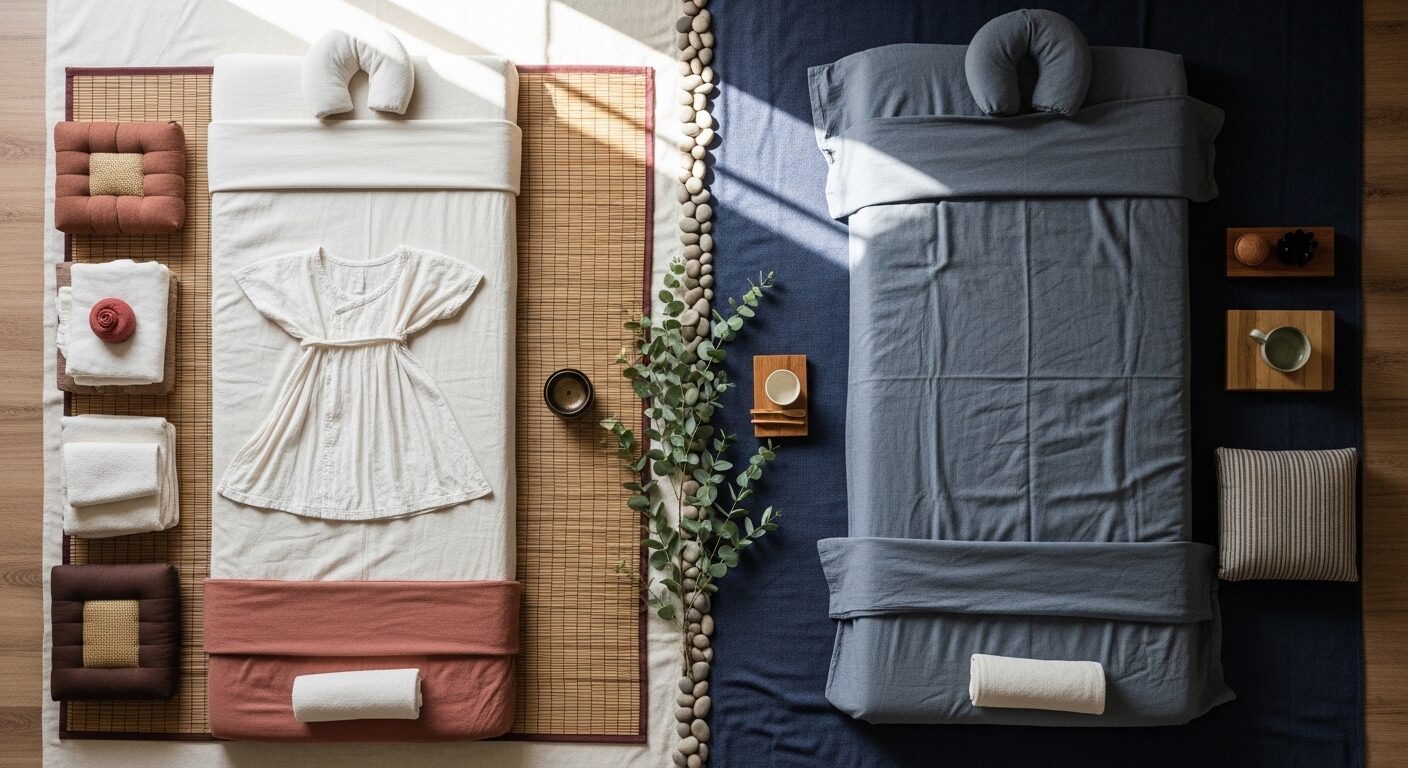
Thai massage has close cousins in Shiatsu, Tui Na, and other Asian bodywork traditions, all of which share the idea of energy channels and pressure points. Shiatsu, which originated in Japan, uses finger and palm pressure along meridian lines and is usually performed on a floor mat with the client clothed. The emphasis is on steady, perpendicular pressure rather than the flowing, dynamic movement of Thai work.
Tui Na is a Chinese medical massage that blends acupressure with rolling, kneading, and stretching techniques. It tends to feel more clinical and is often used in conjunction with acupuncture and herbal medicine as part of a traditional Chinese medicine treatment plan. Thai massage shares some of the same roots but has a different feel, with more full body stretching and a more rhythmic pace.
If you enjoy acupressure and pressure point work but want more active stretching, Thai massage usually feels more satisfying than Shiatsu. If you are specifically working with a traditional Chinese medicine practitioner, Tui Na may fit your overall plan better. Trying each at least once is the best way to see which approach suits your body.
Who Thai Massage Works Best For
Thai massage is a strong fit for people who feel tight, stiff, and physically locked up rather than knotty in specific spots. Desk workers with rounded shoulders and short hip flexors tend to benefit substantially, as do runners, cyclists, and anyone whose training leaves them with limited range of motion. People recovering from long periods of inactivity or dealing with stress related tension often find that Thai work unwinds them more efficiently than traditional Western styles.
It is less ideal for a few groups. Clients with blood clotting disorders, severe osteoporosis, recent surgeries, or unstable joints should speak with their physician and therapist before booking. Pregnant clients need a therapist trained in prenatal work, since several Thai techniques are not safe during pregnancy. If intense stretching or hands on partner movement feels uncomfortable for you, a more traditional massage style may be a better starting point.
For most healthy adults, though, Thai massage is both safe and deeply useful. If you are trying to figure out how often to schedule sessions, our guide on how often you should get a massage offers a good framework you can apply here too. Many clients start with a session every two to four weeks and adjust based on how their body responds.
What to Expect Your First Time
Preparing for a Thai massage is simple. Wear comfortable, stretchy clothing you can easily move in, such as athletic wear or loose cotton. Avoid heavy meals in the two hours before your session, and arrive a few minutes early so you have time to settle in and discuss your goals with your therapist.
During the session, communicate openly. Let your therapist know about injuries, areas of concern, and any position or stretch that feels painful rather than productive. Good Thai therapists continually check in and adjust depth and range based on your feedback. You do not need to be flexible to benefit from Thai massage; your therapist will meet your body where it is.
After the session, drink plenty of water and plan a gentle rest of the day if possible. Mild soreness over the next 24 to 48 hours is common, especially after your first few sessions, and usually reflects the work your body did through the stretches. A follow up visit to the infrared sauna can extend the relaxation and support tissue recovery. A membership can also make regular Thai sessions more affordable if you plan to add them to a consistent wellness routine.
Frequently Asked Questions
Do I need to wear special clothing for Thai massage?
Wear loose, stretchy clothing you can move and stretch in easily. Athletic wear, yoga clothes, or soft cotton pants and a t-shirt all work well. Avoid anything tight, restrictive, or slippery, and leave jewelry and belts at home. Your therapist can advise on specific options when you book.
Is Thai massage painful?
Thai massage can feel intense, especially during deep stretches or firm compressions, but it should never be sharply painful. The pressure is usually distributed across a wide surface rather than concentrated on one spot, which tends to feel more manageable than pointed deep tissue work. Always tell your therapist if anything feels like too much.
How long does a Thai massage session last?
Most Thai massage sessions run 60 to 90 minutes. Traditional sessions in Thailand can last two hours or more, but 60 to 90 minutes is standard in the United States. Longer sessions allow the therapist to work the full body more slowly and include additional stretches and pressure points.
Will I be sore afterward?
Mild soreness for a day or two is common after a Thai massage, especially after your first few sessions. This is usually a sign that your body did real work through the stretches and compressions. Drinking water, resting, and doing gentle movement the following day helps your tissue settle into its new range.
How is Thai massage different from yoga?
Yoga is self directed; you hold the poses yourself. Thai massage is assisted; a therapist moves your body through similar stretches while you stay passive. The combination with acupressure and rhythmic compressions also makes Thai massage distinct from any kind of stretching practice you could do on your own.
Can Thai massage help with back pain?
Yes, particularly for back pain related to tight hips, tight hamstrings, or postural imbalances. Research has shown Thai massage to be effective for chronic low back pain, with benefits that last in the short term. For acute injuries or disc related issues, always consult your doctor first and make sure your therapist knows your full history.
About Oak Haven Massage
Oak Haven Massage is a therapist owned wellness studio serving the Greater Austin and San Antonio regions, with therapists who specialize in a wide range of modalities tailored to each client’s needs. Our team trains well beyond a standard massage license, offering techniques that span deep tissue, prenatal, sports, craniosacral, lymphatic, aromatherapy, and more. You can meet the teams at our Austin MoPac/2222, Austin Pecan Park, and Austin South First studios, where every session is tailored to your body and your goals.
Ready to Try Something New?
If Thai massage sounds like the kind of reset your body has been asking for, our therapists can help you choose the right style and pace for your needs. Book a session at our San Antonio Alamo Heights, San Antonio Bulverde, or San Antonio Huebner studio and discover how this approach differs from anything else you have tried. Book your appointment online at oakhavenbooking.com.