

What Every Expecting Mother Should Know About Prenatal Massage in Austin
Pregnancy changes almost everything about the way your body feels. As your center of gravity shifts, your lower back takes on more work, your hips loosen under the influence of the hormone relaxin, and your whole system adjusts to carrying another person. For many expecting mothers in Austin, prenatal massage becomes one of the most welcome forms of relief, offering gentle, hands on care at a time when you need it most. At Oak Haven Massage, we see the same scene play out again and again: a tired, uncomfortable mom-to-be walks in, settles into carefully arranged pillows, and walks out feeling like herself again.
Prenatal massage is not the same as a standard massage, though, and understanding the differences is important before you book. Positioning, pressure, timing, technique, and therapist training all matter more during pregnancy than they do in any other context. Whether you are in your first trimester wondering if massage is safe or your third trimester looking for any relief at all, here is what every expecting mother should know.
What Prenatal Massage Is, and How It Differs From Standard Massage
Prenatal massage is a therapeutic massage specifically adapted for pregnant bodies. A trained prenatal therapist uses modified positioning, lighter pressure, and pregnancy safe techniques to relieve the unique tensions and discomforts that come with pregnancy. The goal is to support the mother’s body without putting her or her baby at any unnecessary risk.
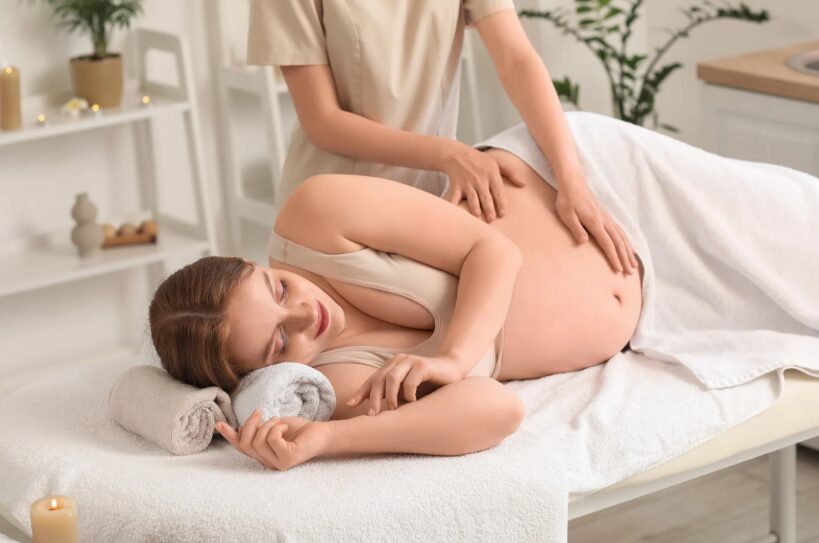
Three things set prenatal massage apart from a standard session. First, positioning is different. After the first trimester, you will not lie on your stomach, and after roughly 22 weeks, lying flat on your back is also avoided because the weight of the uterus can compress major blood vessels. Side lying with pillows and bolsters supporting the belly, hips, and head is the standard position, and some studios use tables with a belly cutout, though many therapists still prefer side lying for comfort and safety.
Second, pressure is lighter. A prenatal therapist typically works with moderate to gentle pressure, avoiding the deep work of deep tissue massage that might put pregnant clients at risk. Pregnancy dramatically increases blood volume, and deep pressure near leg veins can potentially dislodge blood clots, which pregnant women are already at higher risk of developing.
Third, certain pressure points are avoided. Traditional prenatal therapists learn to stay away from specific points on the ankles, wrists, and lower back that some bodywork traditions associate with stimulating uterine contractions. The evidence that these points actually cause contractions is limited, but skilled prenatal therapists err on the side of caution.
The Benefits of Prenatal Massage
Research on prenatal massage has grown considerably over the past 20 years, much of it coming out of the Touch Research Institute at the University of Miami. Findings consistently show measurable benefits for pregnant women who receive regular sessions, both physically and emotionally.
Hormonally, prenatal massage has been shown to reduce cortisol and norepinephrine, two stress hormones, while increasing serotonin and dopamine levels. Lower stress hormones are associated with improved maternal mood, better sleep, and fewer pregnancy complications. In one frequently cited study, women receiving biweekly prenatal massages for just five weeks showed significant drops in stress hormones and improvements in mood, along with fewer complications during birth and lower rates of newborn complications including low birth weight.
Physical benefits are often what brings expecting mothers in the door. Prenatal massage can relieve the lower back and hip pain that comes with carrying extra weight, reduce sciatic discomfort, ease swelling and edema in the legs and feet, and improve circulation throughout the body. Many clients report better sleep after their sessions, which matters enormously when finding a comfortable sleeping position becomes difficult in the third trimester.
Emotional benefits are harder to quantify but just as real. Pregnancy is a period of enormous physical and psychological change, and having a dedicated hour focused entirely on your comfort and care can be profoundly grounding. Anxiety, depression, and general emotional overwhelm often ease over the course of a session and in the days that follow, which is why many OB-GYNs and midwives now routinely recommend prenatal massage as part of a broader prenatal care plan.
When to Start Prenatal Massage
The question of when to begin is one of the most common concerns expecting mothers have. The short answer is that most therapists and healthcare providers suggest waiting until after the first trimester, typically starting around week 12 or 13. The longer answer is more nuanced.
First trimester massage is controversial, not because there is clear evidence that it causes harm, but because the first 12 weeks of pregnancy carry the highest natural miscarriage risk, and many therapists and studios simply prefer not to associate their work with any miscarriage that might occur during that window. This is largely a matter of policy and caution rather than proven risk. If you are in your first trimester and want a massage, it is worth asking your healthcare provider and finding a therapist who is comfortable working with early pregnancy clients.
The second trimester is when most expecting mothers begin regular prenatal massage, and it is also when the benefits tend to be most apparent. Your body is adapting to real physical changes, energy levels are often better than they were in the first trimester, and the discomforts that prenatal massage can address are beginning to show up.
Third trimester massage is also safe and often welcome. As the belly gets bigger, finding a comfortable position at home becomes harder, and the lower back and hip work that skilled prenatal therapists do can bring significant relief. Some women even find that third trimester massage helps them practice the kind of slow, focused breathing that is useful during labor.
What Happens During a Prenatal Session

If you have never had a prenatal massage before, here is what to expect. The session starts with a longer than usual intake conversation. Your therapist will ask how far along you are, how your pregnancy has been progressing, whether you have any complications or risk factors, where you are feeling the most discomfort, and whether your healthcare provider has approved massage. Be thorough and honest here; the details matter.
You will then get comfortable on the table in a side lying position, usually starting on your left side, which is generally considered the best for circulation during pregnancy. Your therapist will arrange pillows and bolsters to support your belly, back, hips, neck, and between your knees. Many expecting mothers describe this as the most comfortable they have felt in weeks. You can be draped to your preferred level of undress, just as in any other massage.
The session itself typically runs 60 minutes, with the therapist focusing on the areas where pregnancy tends to create the most tension. The lower back, hips, glutes, shoulders, and legs get the most attention. The therapist will have you turn to your other side partway through to work both sides evenly. Light to moderate pressure is used throughout, and you should feel relaxed and supported at every point. If something feels off, nauseating, or uncomfortable, speak up immediately.
Afterward, your therapist may suggest specific movements, stretches, or self care practices you can do at home between sessions. Drink water, move slowly, and give yourself time to transition back into your day.
Safety Guidelines Every Expecting Mother Should Know
A few principles will help you get the most out of prenatal massage while keeping both yourself and your baby safe. The most important step is choosing a therapist who has completed specific prenatal training beyond a standard massage license. Prenatal certification covers pregnancy anatomy, positioning, contraindications, and the modified techniques that keep sessions safe. General massage therapists without prenatal training should not be working with pregnant clients, regardless of how talented they are in other areas.
Always tell your therapist how far along you are and share any complications, recent bleeding, or concerning symptoms. Your therapist can adjust or cancel the session based on what you share, and they should welcome detailed information rather than treat it as an inconvenience. If you have any specific concerns, mentioning them at booking rather than saving them for the intake lets the studio assign you to the therapist best suited for your needs.
Avoid hot stone massage during pregnancy, as raising your core temperature is not recommended while you are carrying. Skip deep tissue work and strong pressure, particularly near your legs. And if you feel dizzy, short of breath, nauseous, or uncomfortable at any point in the session, ask your therapist to pause or adjust your position. Your comfort and safety always come first.
When to Skip or Postpone a Session
Prenatal massage is safe for the great majority of healthy pregnancies, but a handful of situations call for either postponing or skipping massage altogether, at least until you have cleared it with your OB-GYN or midwife. Unexplained bleeding or spotting, preterm contractions, preeclampsia, uncontrolled high blood pressure, placenta previa, and a history of recurrent miscarriage or preterm labor are all reasons to consult your healthcare provider first.
Certain gestational conditions also warrant caution. Women with gestational diabetes, blood clotting disorders, a history of deep vein thrombosis, or any condition their doctor is actively monitoring should seek clearance before booking. The same applies if you have developed significant swelling that concerns your provider, since massage to swollen areas needs to be approached carefully.
None of this is meant to discourage expecting mothers from booking prenatal massage. The reality is that most pregnancies are healthy and uncomplicated, and most expecting mothers benefit substantially from regular sessions. A short conversation with your doctor or midwife gives you the green light with confidence, and a qualified prenatal therapist will ask the right questions to keep you safe throughout.
Choosing the Right Prenatal Therapist in Austin
Austin has a deep bench of skilled massage therapists, but not all of them have the specific training to work with pregnant clients. When choosing a therapist, look for explicit prenatal or pregnancy massage certification, not just a general massage license. Ask about their experience working with pregnant clients and which trimesters they are comfortable working with. A good therapist should be able to walk you through their positioning approach, what kinds of pressure and techniques they use, and what they avoid.
If your pregnancy is high risk or complicated, consider asking your OB-GYN, midwife, or doula for a recommendation. Experienced prenatal providers often know which local therapists are trusted by the medical community. Many Austin mothers also ask friends, family, and other clients about their experiences before booking, which can give you useful information beyond what a studio lists on its website.
Prenatal massage can also be a beautiful gift for someone close to you. A gift card is a thoughtful addition to a baby shower or a simple way for partners and family to support an expecting mother during a demanding time. Many Austin moms will tell you that a prenatal massage gift was among the most appreciated things they received during pregnancy.
Once you find a therapist you trust, consistency helps. Research suggests that biweekly sessions produce the strongest benefits, though monthly sessions also help meaningfully. If you are trying to figure out the right cadence for your situation, our guide on how often you should get a massage offers useful context. A membership can make regular prenatal sessions more practical throughout the second and third trimesters, and many mothers continue their membership into postpartum recovery once they are cleared by their provider.
Frequently Asked Questions
Is it safe to get a massage during the first trimester?
The honest answer is that there is no strong evidence that properly performed massage causes first trimester miscarriages, but many studios wait until the second trimester as a matter of policy. If you are in your first trimester and want a massage, speak with your healthcare provider and look for a therapist who is specifically comfortable working with early pregnancy clients. Some will, and some will prefer to wait until week 12 or 13.
What position will I be in during the massage?
After the first trimester, you will typically be positioned on your side with pillows and bolsters supporting your belly, back, hips, and head. Side lying with pillow support is the most common and widely recommended approach. Lying flat on your back for more than brief periods is avoided after roughly 22 weeks, since the weight of the uterus can compress major blood vessels. Lying on your stomach is avoided after the first trimester.
Can prenatal massage help with labor or delivery?
Some research suggests that regular prenatal massage may shorten labor and reduce certain complications, though the findings are not conclusive. What prenatal massage reliably does is help you practice the kind of relaxed, focused breathing that supports the intensity of labor, and it can ease the physical and emotional stress that often accumulates late in pregnancy. Think of it as preparation rather than a guaranteed labor shortcut.
How often should I schedule a prenatal massage?
Most research on prenatal massage uses biweekly sessions, which tend to produce the strongest cumulative benefits. Monthly sessions also help meaningfully. Your ideal frequency depends on your budget, symptoms, and how your body is responding. Many Austin mothers start with monthly sessions in the second trimester and increase to biweekly in the third trimester as discomfort builds.
What if I feel uncomfortable during the session?
Speak up immediately. A qualified prenatal therapist welcomes feedback and will adjust positioning, pressure, or the direction of the session in response. Pregnancy bodies change week by week, and what felt fine last session may not feel right this session. If you ever feel dizzy, short of breath, nauseous, or concerned, ask the therapist to pause so you can reposition or drink water.
Is prenatal massage covered by insurance?
In most cases, no. Some HSA or FSA accounts may cover prenatal massage if prescribed by a doctor, so it is worth asking your healthcare provider and your account administrator. Otherwise, prenatal massage is generally not covered by standard health insurance.
About Oak Haven Massage
Oak Haven Massage is a therapist owned wellness studio serving the Greater Austin and San Antonio regions, with therapists specifically trained in prenatal and pregnancy massage. Our team understands the anatomical, hormonal, and emotional changes that come with pregnancy, and every prenatal session is tailored to your trimester, your body, and your comfort. Our regional teams also include our San Antonio Alamo Heights, San Antonio Bulverde, and San Antonio Huebner studios for expecting mothers in those communities.
Ready to Give Yourself or an Expecting Mom Some Relief?
If you are looking for experienced prenatal care in Austin, our therapists are ready to help you find relief, rest, and a little reassurance during one of the most demanding chapters of your life. Book a session at our Austin MoPac/2222, Austin Pecan Park, or Austin South First studio and discover how thoughtful prenatal massage can support you and your baby. Book your appointment online at oakhavenbooking.com.