

Rejuvenating Cupping Therapy in Greater Austin & San Antonio
Oak Haven Massage provides professional cupping treatments that use suction to lift and separate tissue layers, promoting circulation and releasing muscular tension. Our trained practitioners apply this ancient technique within a modern therapeutic framework for effective results. Visit our online booking platform to schedule your session today.
Vacuum Therapy for Deep Tissue Release
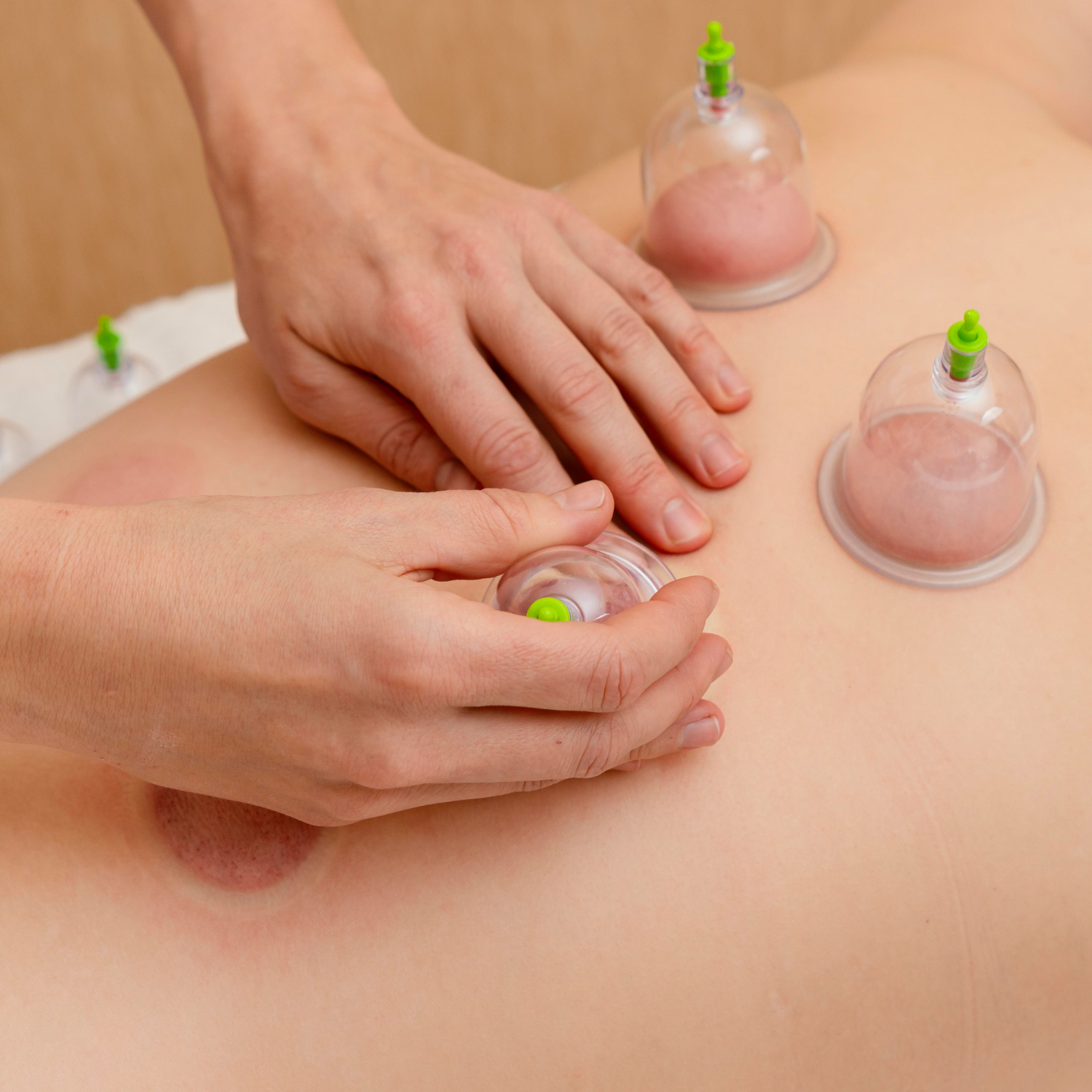
Conventional massage applies downward pressure to compress tissues, yet some muscular restrictions respond better to the opposite approach. Vacuum therapy creates negative pressure that lifts tissue layers apart, allowing fresh blood flow into areas of stagnation while releasing fascial adhesions that compression techniques cannot address. Oak Haven practitioners integrate cupping with manual therapy for comprehensive treatment.
How Suction Massage Works
Cups placed on the skin create a partial vacuum that draws tissue upward into the cup’s interior. This lifting action separates muscle layers, increases local blood flow, and stretches connective tissue in ways that hands alone cannot achieve. The technique produces distinctive circular marks that indicate increased circulation to treated areas and typically fade within several days.
Conditions That Respond to Negative Pressure Treatment
Clients with chronic back tension, shoulder tightness, and fascial restrictions frequently experience significant relief through cupping sessions. The technique also benefits those managing respiratory congestion, as cups applied to the upper back can help loosen chest muscles and promote deeper breathing. Athletes recovering from intense training find cupping accelerates recovery by improving circulation to fatigued muscles.
Static Versus Moving Cup Techniques
Practitioners may leave cups stationary on specific points or glide them across oiled skin to treat larger areas. Static placement creates focused, intense treatment at particular locations, while moving cups provide broader coverage with less concentrated effect. Your therapist selects the appropriate technique based on your condition and treatment goals.
Understanding Fascial Restrictions
Fascia surrounds every muscle, organ, and structure in your body, creating an interconnected web that transmits tension across distant regions. When fascia becomes adhered or restricted through injury, inflammation, or chronic tension, it loses the gliding capacity that allows free movement. Cupping lifts and separates these adhered layers, restoring the sliding surfaces that healthy fascia maintains.
Complementing Traditional Massage Techniques
Many practitioners combine cupping with conventional massage within a single session. Cups may be applied first to loosen particularly stubborn areas before manual work, or used afterward to enhance circulation to tissues that have just received deep pressure. This integrated approach addresses restrictions through multiple mechanisms for more complete resolution.
The Marks Cupping Leaves Behind
Cupping produces circular discolorations that result from increased blood flow to treated areas rather than bruising from tissue damage. These marks typically range from light pink to deep purple depending on the degree of stagnation present and usually fade within three to ten days. Their presence indicates that circulation has been stimulated in areas that previously received inadequate blood flow.
Myofascial Decompression for Pain Relief
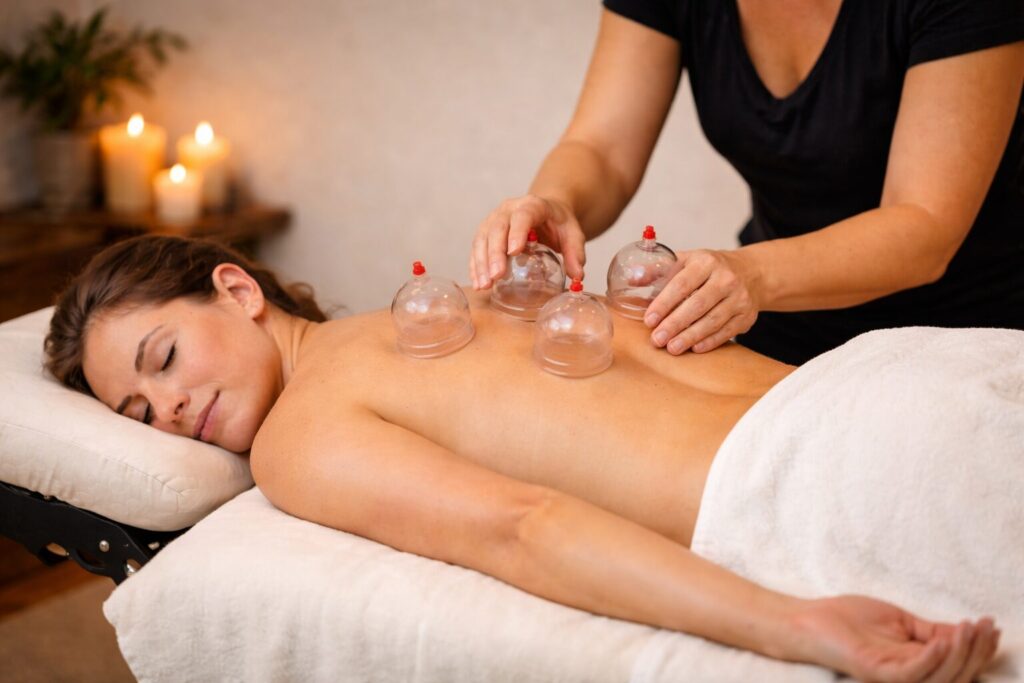
Traditional myofascial work employs compression to release restrictions, but myofascial decompression achieves similar goals through opposite mechanical action. The lifting force created by cupping separates adhered tissue layers and creates space for improved fluid exchange, addressing fascial dysfunction from a different angle than manual pressure provides.
Why Choose Oak Haven Massage?
Oak Haven Massage has provided therapeutic bodywork throughout Central Texas since 2005, completing over 2 million sessions during that time. Our cupping practitioners understand both the traditional foundations of this technique and its modern therapeutic applications. We maintain consistent standards across all six locations in the Austin and San Antonio metropolitan areas.
Here is what distinguishes our cupping therapy services:
Explore Our Other Massage Services
Cupping therapy represents one modality within our comprehensive therapeutic offerings. Depending on your specific concerns and preferences, other treatments may complement or provide alternatives to vacuum therapy. Our staff can recommend the most appropriate service based on your individual needs.
Here are the additional services available at Oak Haven Massage:


Our Locations
Oak Haven Massage operates six facilities throughout the Greater Austin and San Antonio metropolitan areas, each staffed with licensed massage therapists trained in cupping therapy and other therapeutic modalities. Clients throughout Central Texas can find a convenient location for their vacuum therapy sessions.
Here are our current locations:
See What Our Customers Have To Say
Experience Cupping Therapy Today
Fascial restrictions and chronic muscular tension sometimes require approaches that compression alone cannot provide. Oak Haven Massage delivers skilled cupping therapy from practitioners who understand how to integrate this technique effectively with modern therapeutic frameworks. Our locations throughout the region offer convenient access to this distinctive treatment modality.
Contact Oak Haven Massage to learn more about cupping therapy or check our online booking platform to schedule your appointment.